"Si fueramos los unicos en el universo, seria un gran desperdicio de espacio" Carl Sagan. Que pequeño seria Dios, si despues de haber creado este inmenso universo, poblara solamente este pequeño planeta tierra. Ese no es el Dios que yo conozco" Papa John XXIII
Seguidores
martes, 26 de mayo de 2015
Mision Rahma
Hace más de 4,200 años, en algún lugar del cosmos, se iniciaría lo que hoy conocemos como Misión Rahma. Esta misión surgió en el seno del Consejo Galáctico, es decir, en nuestra Vía Láctea. Este Consejo se encarga de velar por la evolución de todas las civilizaciones de la Galaxia y es dirigido por grandes Maestros que han alcanzado un alto grado de Sabiduría. Estos Maestros Cósmicos son denominados como "Los 24 Ancianos". Se determinó que esta ayuda debería extenderse al planeta Tierra, tercero de nuestro sistema solar, pues estaba por cumplir su ciclo de edad que lo llevaría a subir de plano de evolución.
Se pensó en la clase de gente que se necesitaría para que llegado el momento, los hermanos homogéneos en misión y diferentes en su manera de ser preparados, se encuentren y se reconozcan. Gente que bajo una meta común cambiaran y negaran los caracteres que tenían y tomaran una nueva meta con sello propio, llamado Todo Amor; gente que sería escogida con relación a lo que desempeñaría cada uno, a su papel dentro de la misión de preparación para el advenimiento de una nueva humanidad.
Esta gente tendría que estar dispuesta a vivir una serie de pruebas poco comunes para la gran mayoría humana, y con experiencias duras en el medio donde viviría. Tendría la misión no sólo de alertar o advertir, sino de ser puente para que el resto de la humanidad se encuentre. Se buscaría también a los que promoverían el desarrollo de aquellos iniciados en la evolución de planos blancos, o sea los Guías coordinadores de la maduración mental y espiritual de los hermanos menores terrestres.
El Guía Oxalc aclara todo este panorama:
"Como en un juego de sonidos, RAHMA tenía una vibración o clave cósmica con frecuencias y sonidos particulares, en los que armonizarían todos los que en ella intervinieran. Desde el 4.200 se estuvo buscando la clave, que el Mentor entre otras misiones, le había atribuido; y se encontró esta vibración que se traduciría en el amor de Los de las Vestiduras Blancas".
La idea y plan Rahma, se basaba en crear una comunidad de hermanos "variados" llamados los rahmas o rahmitas (cariñosamente), que serían los voceros y hacedores del llamado al cambio; y los de Rahma, o sea toda la gente llamada por intermedio de los primeros a la evolución.
El 22 de Enero de 1974, en Lima - Perú (Sudamérica), se recibió el primer mensaje telepático del Guía Extraterrestre Oxalc. Este ser decía provenir de Ganímedes (ellos le llaman Morlen), una de las principales lunas de Júpiter. Aunque en un inicio hubo dudas de la autenticidad del mensaje - por razones obvias -, al aparecer físicamente las naves extraterrestres sobre el Desierto de Chilca al sur de Lima, ante periodistas de la prensa extranjera, estas dudas se fueron disipando. De ser en un principio un puñado de jóvenes entusiastas que habían tenido una experiencia cercana con extraterrestres, este grupo creció como un sólido movimiento de contacto que llegó a desarrollarse en más de 35 países. Las experiencias también crecieron, pero no sólo en número sino también en intensidad. Así, de ver las naves se pasó a contactar directamente con los tripulantes. Luego de ello se pudo ingresar físicamente al interior de las citadas astronaves y, poco a poco, se fue comprendiendo desde cuándo se había estado generando esta Misión de contacto que los Guías denominaron RAHMA.
En la Tierra, la Misión Rahma - que es una de tantas que forman parte del Plan - es dirigida u orientada por 49 Guías Extraterrestres: 14 de Ganímedes, 14 de Apu, 19 de Venus, 1 de Can Mayor y finalmente un Guía originario de la Tierra.
viernes, 15 de mayo de 2015
Recopilando Sabiduria
La misión de todos ustedes va más allá de la responsabilidad que tienen los gobernantes de las grandes naciones, por cuanto están llamados consciente y responsablemente a dar ánimos en medio de la mayor desolación; a mantenerse firmes cuando todos desfallecen a vuestro alrededor; a conservar y vivir la fe cuando todos dudan en un futuro planetario; en otras palabras : a ser luz en la oscuridad.
La misión es el esfuerzo que deben asumir de superación gradual, orientado hacia la consecución de niveles cada vez más altos de avance evolutivo. Una misión basada en irradiar esperanza con el ejemplo de vida.
“La gran misión por la humanidad es llegar a ser capaces de comunicarse consigo mismos y con la naturaleza, siendo amor y dándolo. Gran parte es recordar y recuperar sus facultades y aptitudes de cuando niños. Pero hacerlo con convicción , con fe en el cambio ,y con esperanza en un futuro que ha de existir como proyección de mentes positivas y constructivas
“Ahora es el tiempo en que el tiempo es ahora.
El ser humano tiene un potencial sin límites que le permite no sólo adelantarse a los acontecimientos a través de lo que ustedes conocen como la premonición y la precognición, sino que también su conocimiento previo de las cosas le puede ayudar a modificar el futuro.
El futuro es la ley misma de Causa-Efecto , por lo que todo es la consecuencia de las actuaciones y decisiones que tomaron anteriormente. Si quieren cambiar el futuro, tienen que crear nuevas causas que generen nuevos efectos que desplacen a los anteriores, y cualquier modificación por mínima que sea , traerá consigo un futuro diferente. Pero hay que creerlo para crearlo.
Preguntas realizadas a Sixto:
¿Cómo actuar para comprender mejor rahma? Sixto: Amando, porque Rahma es amor, se le debe vivir. Rahma es una señal en el camino, ojo, pare, despierte conciencia, abra los ojos, medite, pero no se detenga demasiado, cruce al otro lado; hay un peligro que está en nosotros en que no tengamos la fuerza de voluntad suficiente para realizar ese cambio irreversible que debemos haber iniciado. Rama es
un aviso, identificándonos con él, debemos empezar a ser auténticos, consecuentes, buscar cada uno su camino, como decía Buda: " nadie tiene que caminar por donde yo camino, porque lo que fue para mi no tiene que ser para ustedes". Y un gran budista no declarado, Antonio Machado, decía: " caminante no hay camino, se hace camino al andar y al volver la vista atrás se ve la senda que nuca se ha de volver a pisar". Se debe Amar las 24 horas del día y no temer a exponerse o a sacrificarlo todo"
¿Qué cualidades espirituales se logran con los viajes interplanetarios? - Sixto: Ninguna
Sixto: Los guías no han hablado de cataclismo sino de catástrofe, catastro de fe. Ocurra lo que ocurra debemos estar preparados. No podemos actuar con temor. No hay más infierno o paraíso que este en que vivimos, todo depende de como lo enfrentemos. Si no surge la necesidad de cambio en nosotros, no cambiaremos. Nos debemos sentir vacíos para poder ser llenados de Amor. no se debe utilizar Rahma para re avalar ninguna escuela. Rahma avala a todas y a ninguna, la verdad no es de nadie, está repartida. Todos percibimos parte de la verdad por eso debemos conversar entre nosotros para ampliar nuestro conocimiento. Los guías sugieren pero la evolución es de cada uno.
¿Mueren como los seres humanos, con putrefacción, se desintegran? Mueren como nosotros. La fetidez no existe en tal grado por la diferente alimentación. Los cuerpos los incineran, que es una forma de desintegración y sus cenizas las utilizan como abono en las plantas, ya que son muy buenas pues contienen sales minerales. - ¿Rahma aprueba o recomienda la incineración de cadáveres? Rahma no aprueba ni desaprueba nada. Es a lo que piense cada uno - Qué es lo que hace envejecer a los Hermanos Mayores? Las condiciones del planeta, la vibración que disminuye la vitalidad de las células, por eso deben recambiar los tripulantes pues al estar aquí, envejecen.
- Puedes explicar detenidamente: " El que Ama la luz ha de vibrar en el quinto de rahma, el que se entrega al plan del altísimo conocerá sus designios, interpretará sus mandatos y realizará su existencia" -Sixto: El número 5 es el ser humano, la estrella de cinco puntas es el hombre, la estrella de seis puntas es el equilibrio cósmico, espiritual el triangulo hacia arriba y material el triangulo hacia abajo. Antes del equilibrio cósmico debe existir el equilibrio interno y eso , se logra al conocer la propia humanidad.. Vibrar en el quinto de rahma es auto conocerse y somos nosotros mismos quienes debemos hacerlo. El equilibrio cósmico vendrá por añadidura. Trabajemos primero con nosotros y luego con los demás. Debemos vivir, practicar y actuar y sin darnos cuenta los demás lo verán. no debemos descuidar el ejemplo, es la forma de enseñar. Hay una permanente pugna de fuerzas y nosotros debemos decidir quién domina
¿ El origen de los extraterrestres es terráqueo?- Sixto Algunos estuvieron en la Tierra, caso de Oxalc, en la persona de Samuel el Profeta; la mayoría son de otro planeta.
-¿Existiría la posibilidad de que existiera un hermano mayor aquí y ahora entre nosotros? - Sixto: Por qué no
martes, 21 de abril de 2015
"Los extraterrestres del planeta Apu".
Investigación y contacto en Yungay, Áncash, Perú (2015).
Toda la información será publicada en este nuevo libro de Ricardo González, que tendrá una versión digital gratuita en Scribd para que el mensaje llegue a todos.
www.legadocosmico.com
sábado, 18 de abril de 2015
jueves, 16 de abril de 2015
LOS REPTILIANOS por Sixto Paz
|
lunes, 13 de abril de 2015
When can we talk to aliens?
By Meg Urry
Updated 2:10 PM ET, Mon April 13, 2015

Water in the solar system 12 photos
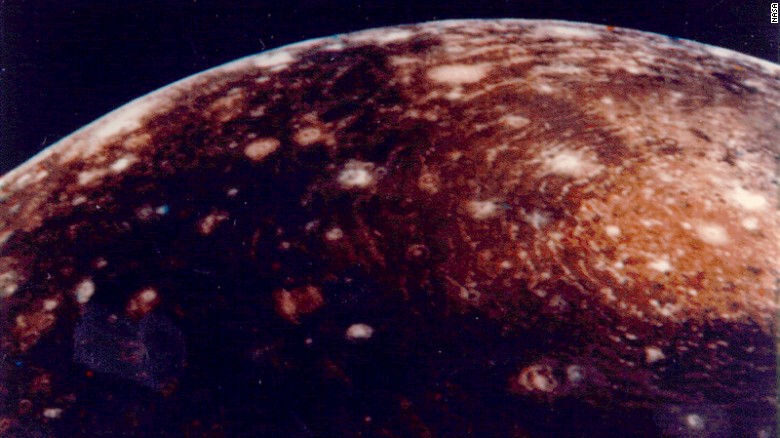
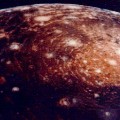
Voyager 1 captured this image of Jupiter's moon Callisto. Scientists have detected ice and carbon dioxide on its surface.
Hide Caption
7 of 12

Water in the solar system 12 photos
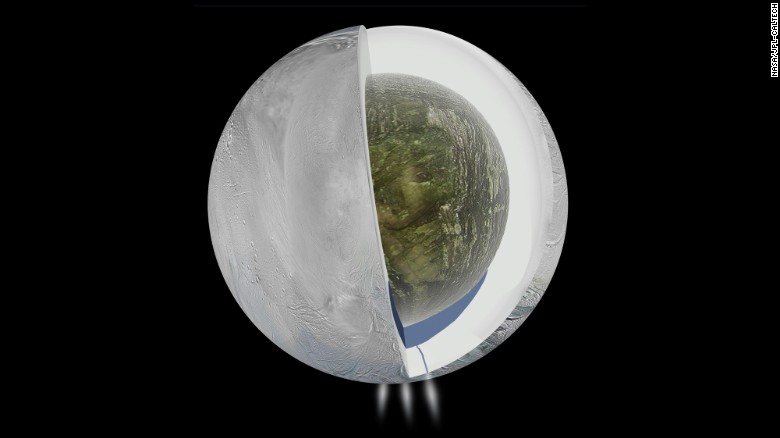
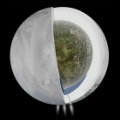
Gravity measurements by NASA's Cassini spacecraft and Deep Space Network indicate that Saturn's moon Enceladus, which has jets of water vapor and ice gushing from its south pole, also harbors a large interior ocean beneath an ice shell, as this illustration depicts.
Hide Caption
8 of 12

Water in the solar system 12 photos
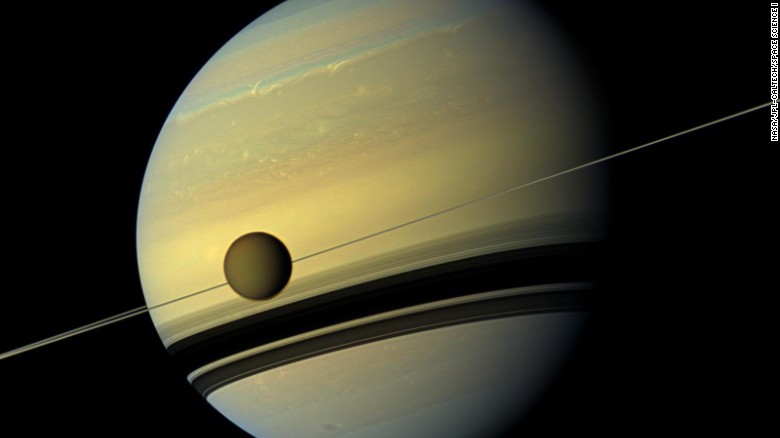
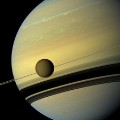
NASA's Cassini mission has evidence of an ocean inside Saturn's largest moon, Titan, which might be as salty as the Earth's Dead Sea.
Hide Caption
9 of 12

Water in the solar system 12 photos
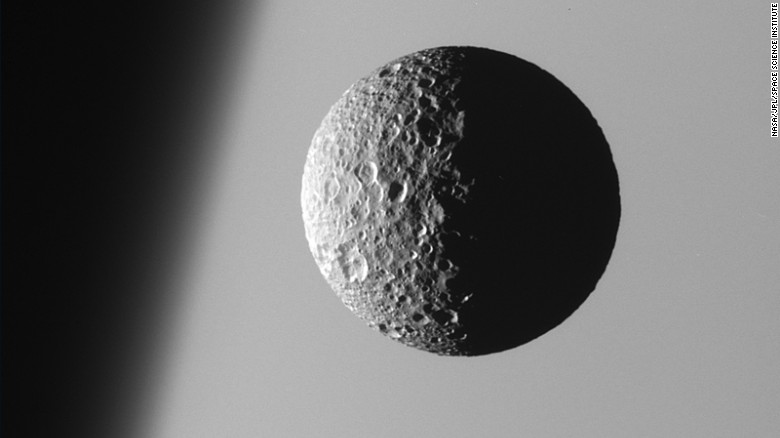
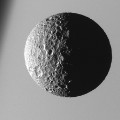
Mimas, the smallest and closest of Saturn's eight main moons, is heavily cratered and has a low density that suggests it is mostly composed of water ice. The moon's main 88-mile-long crater makes it resemble "Death Star" from "Star Wars Episode IV."
Hide Caption
10 of 12

Water in the solar system 12 photos
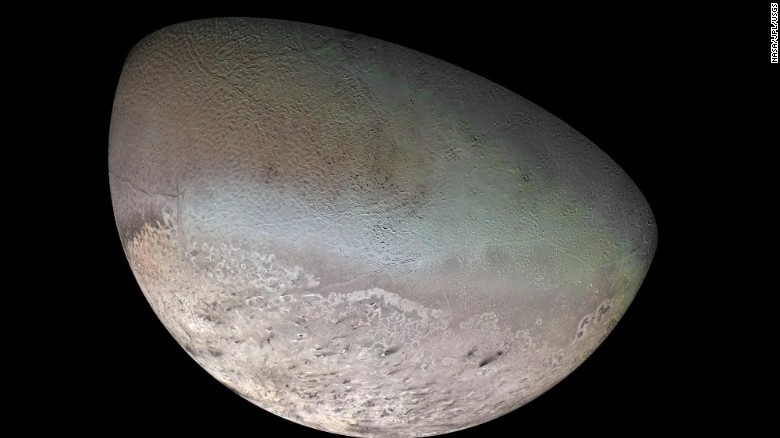
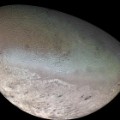
Neptune's largest moon, Triton, is so cold that its surface is composed mainly of nitrogen ice.
Hide Caption
11 of 12

Water in the solar system 12 photos
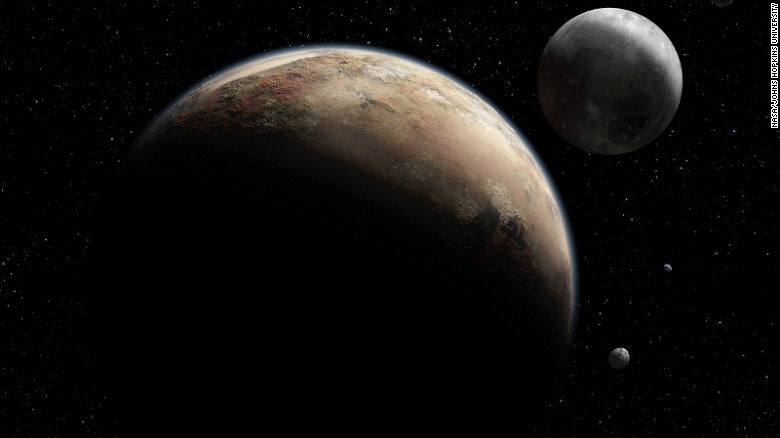
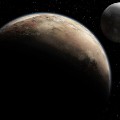
An artist's concept shows Pluto and its moons. Pluto's moon Charon has cracks that suggest it once had underground water.
Hide Caption
12 of 12

Water in the solar system 12 photos
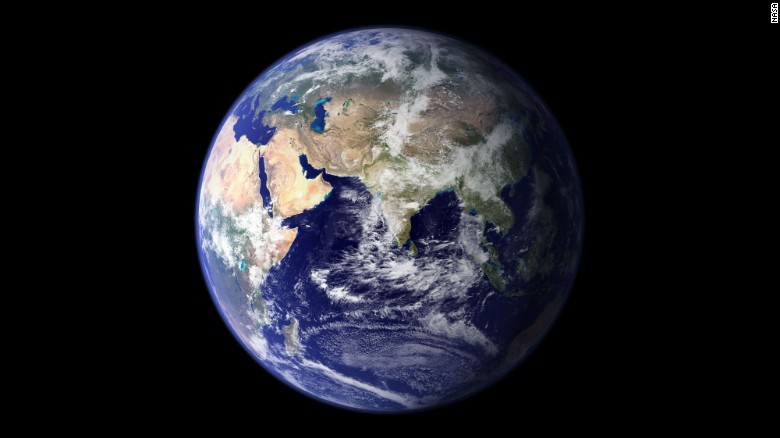
Life as we know it is carbon-based and requires liquid water. About 70% of the Earth's surface is covered with water, making life possible.
Hide Caption
1 of 12

Water in the solar system 12 photos
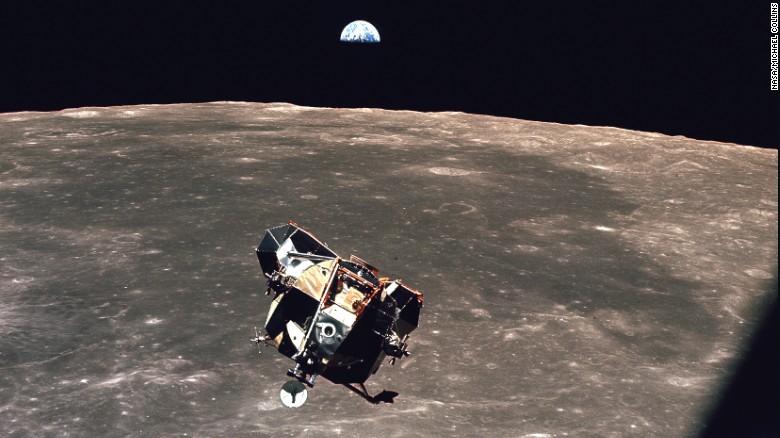
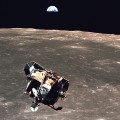
The Eagle lunar module of Apollo 11 ascends from the surface of Earth's moon in 1969. The presence of water on the moon has been confirmed by scientists.
Hide Caption
2 of 12

Water in the solar system 12 photos
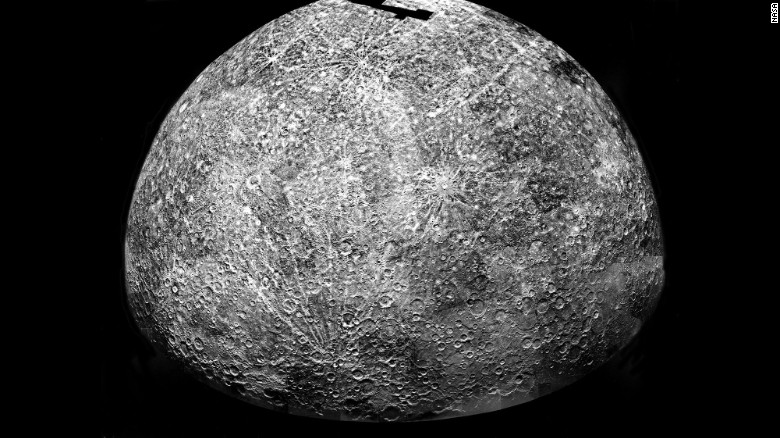
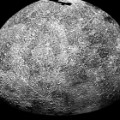
Mercury is the closest planet to the sun and very hot, but its polar regions may have water ice and other frozen volatile materials, according to NASA studies.
Hide Caption
3 of 12

Water in the solar system 12 photos
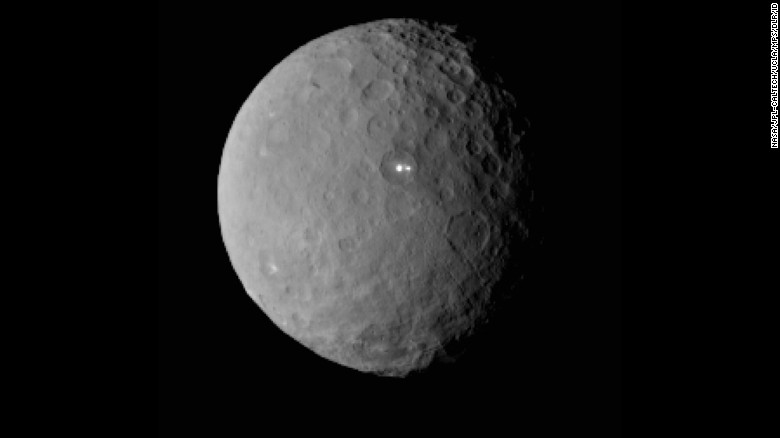
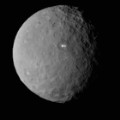
Dwarf planet Ceres, composed of rock and ice, is the largest object in the asteroid belt.
Hide Caption
4 of 12

Water in the solar system 12 photos
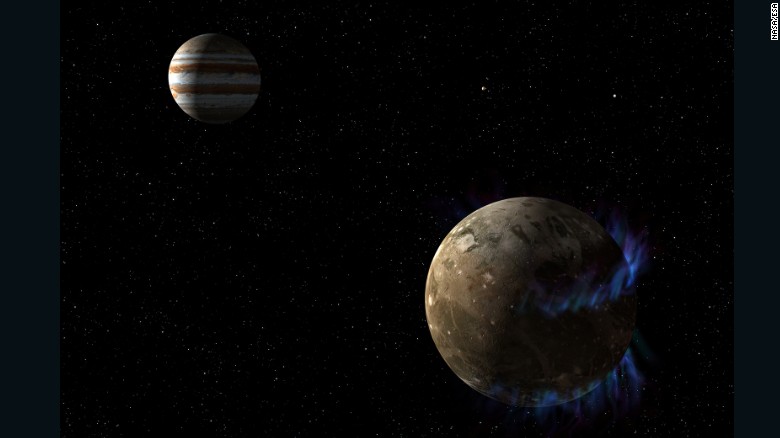
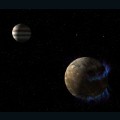
In this artist's concept, the moon Ganymede, right, orbits the giant planet Jupiter. NASA's Hubble Space Telescope observed auroras on the moon generated by Ganymede's magnetic fields. A saline ocean under the moon's icy crust best explains shifting in the auroral belts measured by Hubble.
Hide Caption
5 of 12

Water in the solar system 12 photos
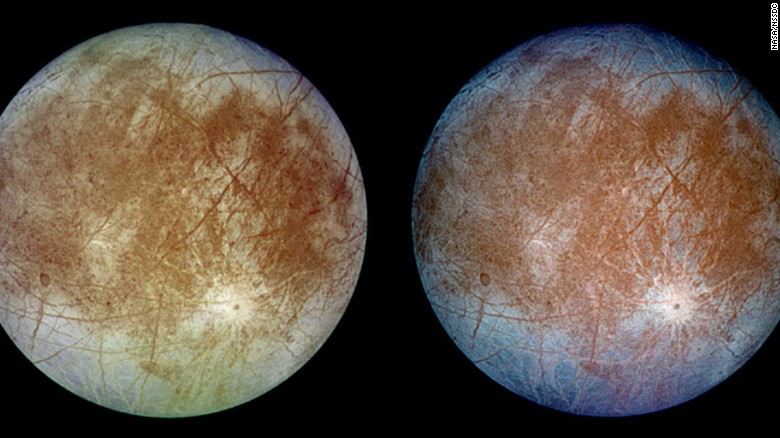
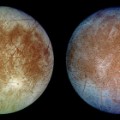
The trailing hemisphere (the side that faces away from its direction of motion) of Jupiter's moon Europa was captured by the Galileo spacecraft. The left image shows Europa in approximately true color and the right image shows Europa in enhanced color to bring out details. NASA data suggest that Europa has a subsurface ocean.
Hide Caption
6 of 12

Water in the solar system 12 photos
Voyager 1 captured this image of Jupiter's moon Callisto. Scientists have detected ice and carbon dioxide on its surface.
Hide Caption
7 of 12

Water in the solar system 12 photos
Gravity measurements by NASA's Cassini spacecraft and Deep Space Network indicate that Saturn's moon Enceladus, which has jets of water vapor and ice gushing from its south pole, also harbors a large interior ocean beneath an ice shell, as this illustration depicts.
Hide Caption
8 of 12

Water in the solar system 12 photos
NASA's Cassini mission has evidence of an ocean inside Saturn's largest moon, Titan, which might be as salty as the Earth's Dead Sea.
Hide Caption
9 of 12

Water in the solar system 12 photos
Mimas, the smallest and closest of Saturn's eight main moons, is heavily cratered and has a low density that suggests it is mostly composed of water ice. The moon's main 88-mile-long crater makes it resemble "Death Star" from "Star Wars Episode IV."
Hide Caption
10 of 12

Water in the solar system 12 photos
Neptune's largest moon, Triton, is so cold that its surface is composed mainly of nitrogen ice.
Hide Caption
11 of 12

Water in the solar system 12 photos
An artist's concept shows Pluto and its moons. Pluto's moon Charon has cracks that suggest it once had underground water.
Hide Caption
12 of 12

Water in the solar system 12 photos
Life as we know it is carbon-based and requires liquid water. About 70% of the Earth's surface is covered with water, making life possible.
Hide Caption
1 of 12

Water in the solar system 12 photos
The Eagle lunar module of Apollo 11 ascends from the surface of Earth's moon in 1969. The presence of water on the moon has been confirmed by scientists.
Hide Caption
2 of 12

Water in the solar system 12 photos
Mercury is the closest planet to the sun and very hot, but its polar regions may have water ice and other frozen volatile materials, according to NASA studies.
Hide Caption
3 of 12

Water in the solar system 12 photos
Dwarf planet Ceres, composed of rock and ice, is the largest object in the asteroid belt.
Hide Caption
4 of 12

Water in the solar system 12 photos
In this artist's concept, the moon Ganymede, right, orbits the giant planet Jupiter. NASA's Hubble Space Telescope observed auroras on the moon generated by Ganymede's magnetic fields. A saline ocean under the moon's icy crust best explains shifting in the auroral belts measured by Hubble.
Hide Caption
5 of 12

Water in the solar system 12 photos
The trailing hemisphere (the side that faces away from its direction of motion) of Jupiter's moon Europa was captured by the Galileo spacecraft. The left image shows Europa in approximately true color and the right image shows Europa in enhanced color to bring out details. NASA data suggest that Europa has a subsurface ocean.
Hide Caption
6 of 12


Story highlights
- NASA scientists discuss steps to discover life elsewhere in the universe over the next two decades
- Meg Urry: Life elsewhere in the universe, and even elsewhere in our own Milky Way galaxy, is practically inevitable
- But the chances that we can communicate with that life are slim, she writes
Meg Urry is the Israel Munson professor of physics and astronomy at Yale University and director of the Yale Center for Astronomy and Astrophysics. The opinions expressed in this commentary are solely those of the author.
(CNN)Are we alone in the cosmos? Or might there be intelligent life elsewhere?
Last week, NASA scientists discussed in very concrete terms the steps to discovering life elsewhere in the universe over the next decade or two.
This year is the 20th anniversary of the discovery of a planet around a star like our own sun, 51 Pegasi. Since then, ground-based surveys and NASA's Kepler satellite have discovered nearly 2,000 confirmed "exoplanets," and thousands more candidates await confirmation.
Many of these planetary systems are quite unlike our own solar system. Some have large planets like Jupiter that orbit their stars far closer than Mercury, the innermost planet in our solar system. But smaller rocky planets like Earth, though harder to find, appear to be even more abundant.
Life on Earth developed in its oceans about a billion years after the planet formed. That suggests that rocky planets with liquid water on their surfaces might also have developed primitive forms of life.
Life as we know it is carbon-based and requires liquid water. Astronomers define the "habitable zone" around a star as the region within which liquid water can exist on a planet's surface. Any closer to the star, the water will boil into vapor; any farther and the water freezes into ice.
Extrapolating from discoveries to date, astronomers estimate there are perhaps 40 billion Earth-like, habitable-zone planets in our Milky Way galaxy alone.
Of course, there is a difference between single-celled organisms -- which developed 3.8 billion years ago and remained the most sophisticated form of life for another billion years or so -- and mammals, which appeared about 200 million years ago. And then the humans, who have existed for only 200,000 years.
Intelligent life that can communicate via radio waves with other intelligent life is less than 100 years old here on Earth.
So while planets that develop simple forms of life may be a dime a dozen, the number that have sentient beings with whom to converse -- even assuming they evolved as humans did, with ears and spoken language, or eyes and written language -- is likely to be tiny. And life that can use radio waves has existed on Earth for only 0.000002% of the planet's history -- 100 years out of 4.5 billion. If the half dozen or so rocky, Earth-like exoplanets now known are similar, the odds of discovering humanlike life on them are about the same as, well, winning your state lottery with one ticket.
Of course, if there are 40 billion Earth-like planets out there, the odds improve quite a bit. If they all have histories like the Earth's, there might be 1,000 planets in the Milky Way that could support communicative beings.
But before you start composing your first letter to an alien, think about this: The chance that those beings evolved on exactly the same time scale is minuscule. Another planet's 100 years of brilliance might have occurred a billion years ago, or it might happen a billion years in the future.
A lot depends on how long communication capabilities last. Civilizations that can build huge telescopes and broadcast stations also have the technology to destroy their planet. So the duration of the Communication Age on a planet could be short. Not to mention: The average light-travel-time to such a planet could be tens of thousands of years, so unless humans evolve to be ageless, we're not exchanging IMs with aliens anytime soon.
If advanced civilizations can maintain their capabilities for millions of years or more, the chances of communicating with them are not negligible. But in that case, they are likely to be far more sophisticated than we are (since they developed the capability far earlier than we did) -- so if they wanted us to know they exist, wouldn't they simply tell us?
The SETI project has been listening for such broadcasts for more than 30 years in the search for extraterrestrial intelligence. Probably the most likely form of life on exoplanets is far more primitive. Astronomers have found signatures of organic molecules, the building blocks of life, in the interstellar material that permeates the space between stars in our galaxy.
Possible signatures of living organisms on distant exoplanets include an oxygen-rich atmosphere, such as that created by the first bacteria on Earth, or perhaps methane or carbon dioxide. NASA's James Webb Space Telescope, to be launched in 2018, will look for evidence of life in the atmospheres of rocky, habitable exoplanets.
NASA's rovers have shown that Mars was once much more habitable. It had fresh-water lakes and streams of water running along its surface. Some water still remains, and there may yet be life discovered on Mars. New missions plan to look at Europa and Ganymede, moons of Jupiter that have liquid water below their icy surfaces.
Life elsewhere in the universe, and even elsewhere in our own Milky Way galaxy, is practically inevitable. Signs of life on exoplanets orbiting nearby stars will probably be discovered in the coming decades with advanced telescopes. But the chance of talking to those little green men will probably have to wait for another few hundred million years.
Suscribirse a:
Entradas (Atom)